SLP Study Guide Narrative Tour 2026
 Spanish Language Pedagogy Study Guide Narrative Tour
Jill Kerper Mora
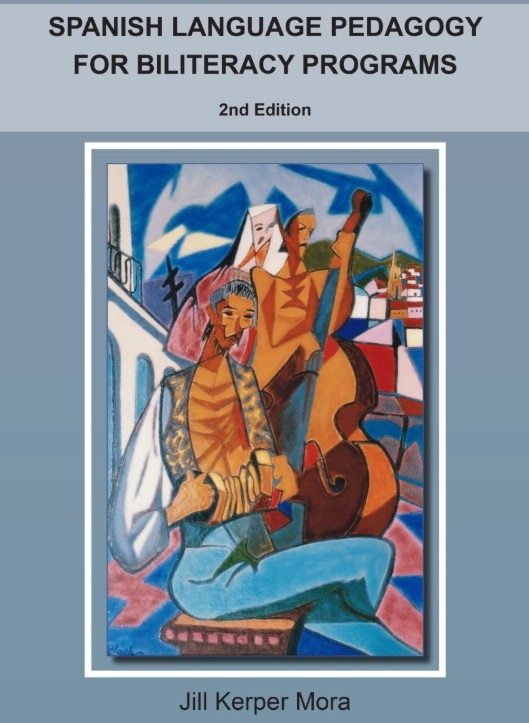
Welcome to MoraModules and to this narrative tour of the Book Companion Website, which is a study guide and resources to accompany the Dr. Mora’s book, Spanish Language Pedagogy for Biliteracy Programs. Please click here to view the MoraModules SLP Book Companion Website Tutorial in a Google Slides PowerPoint. Thank you for your interest in enhancing academic achievement of bilingual learners. JKM
SLP Study Guide Tour
¡Bienvenidos a MoraModules! Welcome. We begin our tour of the MoraModules Spanish Language Pedagogy Book Companion Website. First, go to the MoraModules Home Page. Once you have logged in to the website, you will see the tabs at the top of the Home Page. Go to the Study Guides tab and scroll down to the first link to Dr. Mora’s Book Companion Website. Click there. The link will take you to the SLP Book Companion Website Home Page. Here, you will see a list of the components of the study guide for each of the textbook chapters.
The Study Guide components are listed in the usual order in which they will be used, although each user of the textbook has his or her preferences as to the order of study activities for reading and studying the contents of the book and for exploring the resources available through the SLP Book Companion Website. For example, some users may prefer to read the textbook chapter first and then view the lecture videos, while others prefer to view the lectures and then read the chapter. There is no one correct way to study. That’s the reason why Dr. Mora’s book study guide is multi-modal, to provide different pathways and study options for busy teacher credential candidates and in-service teachers.
To begin our tour, let’s go to Chapter 1 and look at the study guide to go through each of the components. At the top of the Chapter 1 Study Guide page, we have a summary of the chapter. This will help orient practitioners to the contents of each of the textbook chapters that will be augmented through the use of the multiple study guide resources.
Key Terms
We click on the SLP Chapter 1 Home page to access the Key Terms Inventory. The Inventory for each chapter is a downloadable PDF document that lists list of the key technical terms and concepts introduced and discussed in the textbook chapter. The Key Terms Inventory serves as a pre-assessment of the practitioner’s familiarity with the terms, which are with a plus sign or minus sign to signify his or her level of knowledge of the term before reading the chapter. This review of the important terms used in the chapter also alerts the reader to look for the embedded definitions of these terms as he or she reads the chapter.
After reading the chapter, you can return to the Key Terms Inventory to mark a plus or a minus to indicate a clear understanding of the use of the term and the concepts that it can conveys. This post-reading self-assessment allows for a review and reinforcement of the meaning of the technical terms to enhance the practitioner’s professional vocabulary, or what can be called, the jargon of the field of study of bilingualism and biliteracy. The definitions of key terms can be cross-checked through the search feature of the electronic version of the textbook.
Chapter Study and Reflection
Next we go to Chapter Study and Reflection component of the SLP Book Companion Website. This section has two parts. First, we look at the reflection questions for each of the chapter vignettes. Each chapter has one or two vignettes that serve to give a description of processes and planning that teachers do to provide effective biliteracy instruction.
Vignettes
The chapter vignettes are linked from the chapter study guide so we’ll go to Vignette #1 Dual Language Program Models to look at the reflection questions for this vignette there are four questions that prompt educators to examine the vignette more carefully and more in depth to gain an understanding of the overarching principles that are applied in the case study of the Lincoln-Juárez Elementary School context. Notice that the vignette reflection questions are numbered by the chapter in which they are presented with the number of the vignette and the number of the question.
The first vignette is titled Dual Language Model Implementation. A short abstract of the vignette is provided to orient the educator to the content of the vignette from the corresponding chapter. The vignettes are useful for putting the teacher vicariously in the context of a school and classroom where educators are collaborating to plan and implement effective biliteracy instruction. The vignette questions can be used for class discussion or as a professional development activity by assigning questions for interactive group activities to promote critical analysis through group interaction.
Chapter Study Questions
We return to the Chapter 1 Study Guide Home Page and locate the Chapter 1 study questions link. This link takes us to the study questions for the chapter of the Spanish language pedagogy textbook. The questions guide the reader through the major concepts and learning objectives for the chapter. As with the vignette reflection questions the chapter study questions can be used with a collaborative jigsaw format to promote discussion and analysis expert groups focused on a particular question.
In a classroom or professional development workshop setting, the participants then share their ideas about the content of the chapters in groups with their colleagues. In an on-line course, the professor can assign specific study questions for teacher candidates to answer and submit to a comment board. This activity is intended to encourage sharing of comprehension and reactions to the contents of the Spanish Language Pedagogy textbook.
Some of the study questions for the chapter focus on preparing users to complete learning activities included for the chapter. To complete the learning activities, readers consult the readings from the Mexico National Reading Program that are found in the Appendix of the Spanish Language Pedagogy textbook.
Talleres en Español
Dr. Mora’s Webcast Workshops or Talleres en Español are 19 video recordings of lectures in Spanish that constitute 240 minutes or four hours of presentations that frame the content and knowledge of each chapter. The chapters have several lectures that serve to give the academic Spanish terminology and technical vocabulary that teachers use for instruction in Spanish language and literacy that is informed by the academic disciplines.
We will go to Chapter 2 Linguistic Foundations of Biliteracy to look at the selection of lectures in Spanish that build knowledge about Spanish linguistics and English/Spanish contrastive linguistics. Let’s look first at the Taller en Español titled Fonología. Note that the web page has two features: A PowerPoint slide show of the lecture and a video of the lecture in Spanish. Educators can first view the video lecture and then review the contents and vocabulary by going through the slide show, or vice versa, according to their preferred learning style. Having the two modes of presentation available reinforces teacher candidates’ command of technical terms in Spanish as well as the concepts about theory, research and effective practices of Spanish language pedagogy. The duration of the video appears in the right-hand corner of the Webcast Workshop screen. The BCW user can navigate the video lecture using the tool bar or return to the beginning of the lecture by clicking on the Refresh button on your devise.
Learning Activities
Now on our tour of the Spanish language pedagogy book companion website we look at the learning activities that are provided for each chapter. We’re going to go to chapter two and will scroll down to the learning activities to demonstrate the variety of types of activities that are available for practitioners to increase your knowledge of instructional strategies. Many of these learning activities can be used with students.
For example, here is access to one of the many quizzes that are available on the site. Click here for the Quizzes Inventory that lists the quizzes created using the QSM app for the SLP Book Companion Website. We click on the Palabras Compuestas Quiz and you will see that there’s a button to start the quiz. There are series of 20 questions of that can be answered by clicking the right response. This allows you or your students to answer the questions to learn new vocabulary words and apply the concept of compound words that is the objective of the lesson. There are different types of quizzes, including multiple-choice, true-false and matching items for practicing literacy skills and developing academic vocabulary in Spanish. The MoraModules Book Companion Website QSM app will automatically display the results of your quiz responses, showing questions that were answered correctly or incorrectly. You may also get an email copy of your results. Be sure to check your Junk Mail folder if you cannot find your Results email when you complete a quiz.
Another example is a learning activity for developing phonological awareness in Spanish is the module titled Spanish Phonological Awareness Instruction and Assessment. This activity has a slide show that that give the student a prompt for recognizing and stating the meaning of a word based on a picture. The student then comparing that word’s phonology to another word that has only one phonemic difference, such as a consonant or vowel sound. This activity has five levels of phonological awareness for student practice, or the teachers can use the activity to assess students” phonological awareness development.
Notice that a link to a Spanish Phonological Awareness Assessment Booklet is provided as well. Many of the learning activities also have links to Related Modules for further practice or explanation of the strategies and skills taught in the Learning Activities. The Related Modules links may also lead the user to a narrative or to a PowerPoint presentation with further discussion of the topic. This is also the function of the Foundational Knowledge Presentations.
Assessments
Now, let’s move to the Chapter 2 Study Guide and then scroll down to the bottom of the page to find the Chapter 2 SLP Survey. Every chapter has a chapter survey. The chapter surveys are self-assessments provided for you to evaluate areas of instruction from the Spanish Language Pedagogy for Biliteracy Programs textbook (Mora, 2025) and the SLP Book Companion Website where you may need to go back and review. When you click on the chapter survey for chapter two and you will see that it is in the form of a quiz with ten statements about the important concepts or principles that are taught in the chapter the students the user responds with any indicator along a scale from strongly disagree = 1 to strongly agree = 5 as to whether or not you have acquired the knowledge that is the objective of the textbook chapter.
The surveys are for self-assessment purposes to identify any important areas of knowledge that merit rereading or review to achieve the learning objectives of each chapter. Some chapters also have a content knowledge assessment, such as Chapter 2 that includes a quiz for testing the practitioner’s knowledge of linguistics and particularly, the language subsystems. These quizzes are offered for practicing and applying the technical knowledge and terminology covered in the textbook. If you are a student in a university teacher education program or teacher credential program working toward a Bilingual Authorization, your course instructor decides if and how these assessments are used for grading and course assignment completion.
Trouble Shooting
Occasionally you will be given an error message or not land on the link that you expected to when you clicked. Not to worry. If this happens, return to the chapter guide you were working on. Try clicking on the link of the component you wished to open again. If you still get the error message, go back to the MoraModules Home Page and click on the top item under Study Guides to get you to the Book Companion Website Home Page. Then go to the Chapter Home Page that you were working on and click REFRESH. Then try the link again. If this doesn’t work, take a screenshot of the error message and send it to your instructor, who will communicate about the problem with Dr. Mora. Glitches will be rectified as soon as possible.
Conclusion
This concludes our tour of the Spanish Language Pedagogy Book Companion Website and textbook study guide. I hope you find these learning resources helpful for your professional development. I would love to hear from you about how you are using these resources and about other resources you would like to see added to the website to enhance your learning experience with MoraModules. Please contact Dr. Mora at moramodules@gmail.com if you have any questions. Thank you for visiting the MoraModules website.
Tour Video
Please click here to view the video of this tour of the MoraModules Spanish Language Pedagogy Book Companion Website. COMING SOON!
Jill Kerper Mora, Ed.D.